GoodSleep
· Updated: · GoodSleep Team · science-of-sleep · 14 min read
The Ultimate Guide to Sleep Cycles: REM, Deep, & Light Sleep Explained
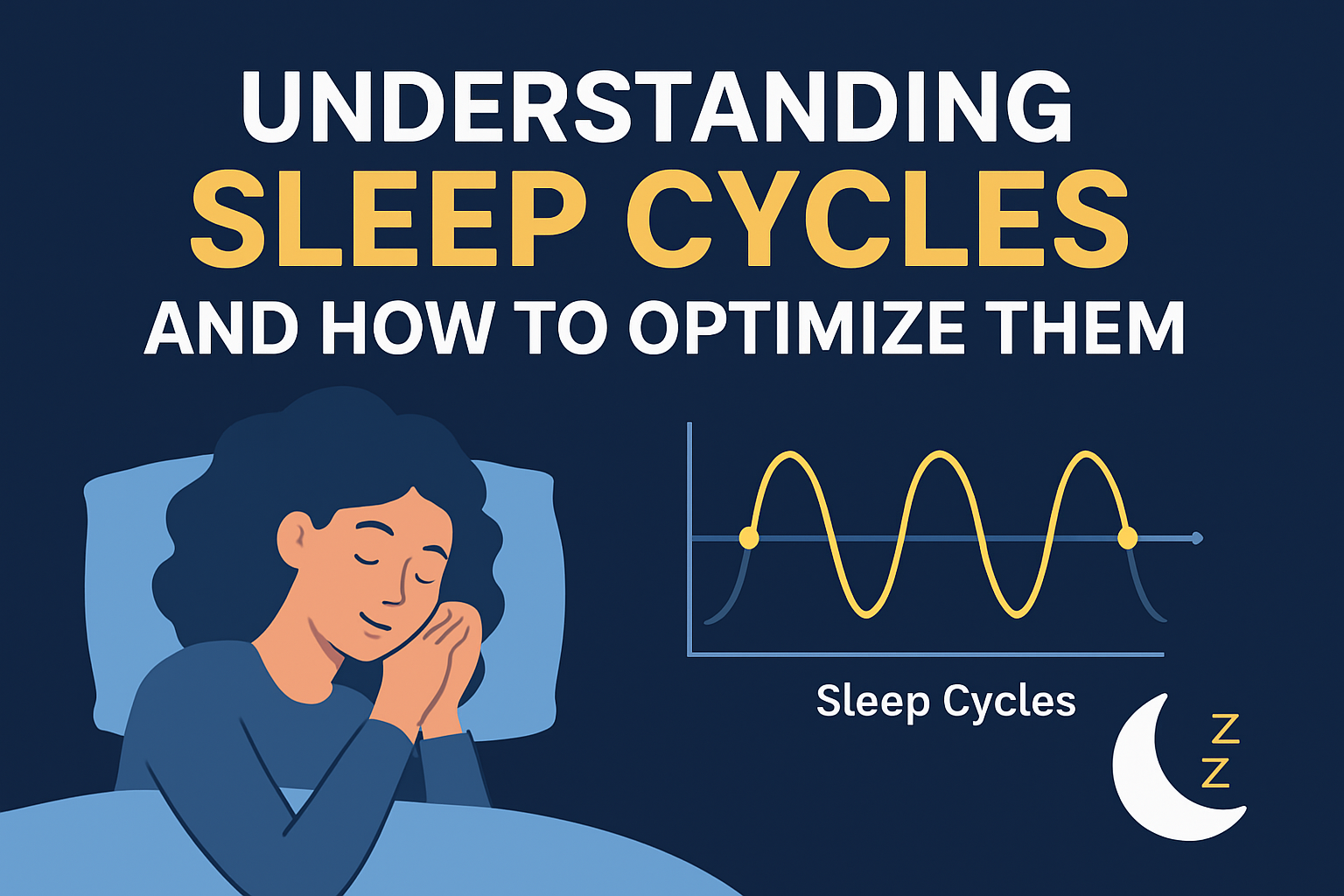
Sleep isn’t just an on/off switch. It’s a complex, dynamic process that follows a predictable pattern throughout the night. This pattern is known as the sleep cycle. Understanding your sleep cycles is the first step toward unlocking better-quality rest, improved mental clarity, and greater physical vitality.
A single sleep cycle is a journey through several distinct stages of sleep, broadly categorized into Non-Rapid Eye Movement (NREM) and Rapid Eye Movement (REM) sleep. Each cycle lasts approximately 90 to 110 minutes, and a typical night consists of 4 to 6 of these cycles.
Let’s dive into what happens during each stage—and why it matters for your health.
The Two Main Types of Sleep: NREM and REM
Every sleep cycle contains two fundamental types of sleep, each with distinct characteristics and functions:
NREM (Non-Rapid Eye Movement) Sleep
NREM sleep makes up about 75-80% of your total sleep time and is divided into three stages (N1, N2, and N3). This type of sleep is primarily focused on physical restoration, growth, and immune function.
Key characteristics of NREM sleep:
- Brain waves slow progressively through each stage
- Heart rate and breathing become slower and more regular
- Blood pressure drops
- Body temperature decreases
- Muscles relax (but are not paralyzed)
- Eyes are still or move slowly
REM (Rapid Eye Movement) Sleep
REM sleep makes up the remaining 20-25% of total sleep time and is when most vivid, narrative-style dreaming occurs. This stage is crucial for mental and emotional processing.
Key characteristics of REM sleep:
- Rapid, darting eye movements behind closed eyelids
- Brain activity increases to levels similar to wakefulness
- Heart rate and breathing become irregular
- Voluntary muscles are temporarily paralyzed (atonia)
- Body temperature regulation is reduced
- Vivid, story-like dreams occur
The Stages of a Sleep Cycle: A Detailed Look
A complete sleep cycle progresses through the NREM stages and then finishes with a period of REM sleep. Here’s what happens at each stage:
Stage N1: The Transition (Light Sleep)
Duration: 1-7 minutes (about 5% of total sleep)
This is the “dozing off” stage—the boundary between wakefulness and sleep.
What’s happening in your brain:
- Brain waves transition from the alpha rhythms of relaxed wakefulness to slower theta waves
- You may experience fleeting thoughts or visual imagery
- The brain begins to disengage from the external environment
What’s happening in your body:
- Heartbeat, breathing, and eye movements slow
- Muscles begin to relax, sometimes with occasional twitches
- You may experience hypnic jerks—sudden muscle contractions that can wake you momentarily
Your experience:
- You can be awakened very easily
- If awakened, you might not realize you were asleep
- You may have a sense of falling or floating
- This stage feels like drifting in and out of awareness
Why it matters: Stage N1 serves as the gateway to deeper sleep. While it provides minimal restorative benefit on its own, it’s a necessary transition that your brain must pass through. Frequent returns to N1 (which happens with fragmented sleep) can significantly reduce overall sleep quality.
Stage N2: True Sleep Begins
Duration: 10-25 minutes initially, increasing with each cycle (about 45-55% of total sleep)
This stage marks the beginning of true sleep. You become increasingly disconnected from your environment.
What’s happening in your brain:
Two distinctive patterns emerge during N2:
Sleep spindles: Bursts of rapid, rhythmic brain wave activity lasting 0.5-2 seconds. Research suggests these serve multiple functions:
- Blocking external stimuli from waking you (sensory gating)
- Consolidating memories, particularly procedural memories
- Facilitating learning and cognitive development
- The number of spindles correlates with intelligence measures in some studies
K-complexes: Large, slow brain waves that appear spontaneously or in response to external stimuli. They function to:
- Suppress cortical arousal, helping you stay asleep
- Process environmental sounds without fully waking
- Potentially contribute to memory consolidation
What’s happening in your body:
- Heart rate slows further (about 8% below waking rate)
- Body temperature drops by 1-2°F
- Eye movements stop completely
- Breathing becomes slow and regular
- Metabolic rate decreases
Your experience:
- Less likely to be awakened by minor disturbances
- If awakened, you’ll recognize you were sleeping
- Dreams can occur but are typically less vivid than REM dreams
- Time perception is distorted—15 minutes may feel like 5
Why it matters: N2 sleep is critical for memory consolidation, particularly for motor learning and factual information. Research shows that people who get more N2 sleep perform better on tasks requiring learned skills. This stage also serves as a transitional platform, preparing the brain for the deeper restorative stages.
Stage N3: Deep Sleep (Slow-Wave Sleep)
Duration: 20-40 minutes in early cycles, decreasing as night progresses (about 15-25% of total sleep)
Also called slow-wave sleep (SWS) or delta sleep, this is the most physically restorative stage—and the hardest to wake from.
What’s happening in your brain:
- Production of delta waves—high-amplitude, low-frequency oscillations (0.5-4 Hz)
- The glymphatic system activates, clearing metabolic waste including beta-amyloid (associated with Alzheimer’s disease)
- Brain activity patterns shift to support memory consolidation
- Growth hormone secretion peaks
What’s happening in your body:
- Heart rate and breathing reach their slowest rates (about 20-30% below waking levels)
- Blood pressure drops significantly
- Muscles are completely relaxed, though not paralyzed
- Blood supply to muscles increases
- Tissue repair and regeneration accelerates
- Energy stores are replenished
- Immune function is enhanced
Your experience:
- Very difficult to wake—if awakened, you’ll feel groggy and disoriented
- This grogginess is called “sleep inertia” and can last 15-30 minutes
- Little or no dream recall, though dreams can occur
- Time spent in this stage feels like mere moments
Why it matters:
Deep sleep is essential for:
| Function | How Deep Sleep Helps |
|---|---|
| Physical recovery | Growth hormone release promotes tissue repair and muscle growth |
| Immune function | Cytokines and immune cells are produced and activated |
| Brain cleansing | Glymphatic system clears metabolic waste at 10x daytime rates |
| Memory | Declarative memories are consolidated (facts, events, learning) |
| Metabolic health | Glucose regulation and insulin sensitivity improve |
| Energy restoration | Cellular energy (ATP) is replenished |
For strategies to increase deep sleep, see our guide on How to Get More Deep Sleep.
Stage 4: REM Sleep
Duration: 10 minutes initially, extending up to 60 minutes in later cycles (about 20-25% of total sleep)
REM sleep first occurs about 90 minutes after you fall asleep. This is where the magic of dreaming happens—and where crucial mental processing occurs.
What’s happening in your brain:
- Brain activity increases dramatically, approaching waking levels
- The prefrontal cortex (logical reasoning) remains relatively quiet
- The limbic system (emotions) becomes highly active
- Memory consolidation shifts to emotional and procedural memories
- Neural connections are strengthened or pruned
- Creativity and problem-solving abilities are enhanced
What’s happening in your body:
- Eyes dart rapidly beneath closed eyelids
- Breathing becomes faster and irregular
- Heart rate increases and blood pressure rises
- Body temperature regulation is temporarily suspended
- Voluntary muscles become paralyzed (REM atonia)—preventing you from acting out dreams
- Sexual arousal may occur regardless of dream content
- Adrenaline surges are common
Your experience:
- Vivid, narrative, emotionally intense dreams occur
- Dreams may incorporate recent experiences and emotional concerns
- Time in dreams can feel expanded or compressed
- If awakened, dream recall is typically good
Why it matters:
REM sleep serves multiple critical functions:
- Emotional processing: The brain processes and integrates emotional experiences, which may explain why REM deprivation leads to emotional instability
- Memory consolidation: Especially for emotional memories and procedural learning (skills, habits)
- Creativity enhancement: The unusual neural activity patterns during REM may facilitate creative connections
- Brain development: Infants spend 50% of sleep in REM, suggesting its role in neural development
- Learning optimization: Studies show improved performance on learned tasks after REM-rich sleep
Learn more about this fascinating stage in our article: What is REM Sleep and Why is it Crucial for Your Brain?.
How Sleep Cycles Change Through the Night
The structure and composition of your sleep cycles are not static—they evolve throughout the night in a predictable pattern.
The First Half of the Night: Deep Sleep Dominant
Hours 1-4:
- Sleep cycles contain the longest periods of deep sleep (N3)
- The first deep sleep episode may last 45-60 minutes
- REM periods are brief (10-15 minutes)
- Physical restoration is prioritized
- This is when most growth hormone is released
Key insight: If you must cut sleep short, losing early-night sleep costs you the most deep sleep.
The Second Half of the Night: REM Sleep Dominant
Hours 4-8:
- Deep sleep episodes shorten or disappear entirely
- REM periods lengthen progressively (30-60 minutes)
- More N2 (light sleep) between REM periods
- Mental and emotional processing intensifies
- Dreams become longer and more vivid
Key insight: Sleeping in (recovering from sleep debt) primarily adds REM sleep, which may explain why it’s so refreshing mentally.
Sleep Architecture Visualization
A typical night’s sleep architecture looks something like this:
Time:     11pm   12am   1am    2am    3am    4am    5am    6am    7am
          |------|------|------|------|------|------|------|------|
Awake     ▬                                              occasional
N1        ▬▬     ▬      ▬      ▬      ▬      ▬      ▬▬     ▬▬
N2        ▬▬▬▬   ▬▬▬    ▬▬▬▬   ▬▬▬▬   ▬▬▬▬▬  ▬▬▬▬▬  ▬▬▬▬▬  ▬▬▬▬
N3        ▬▬▬▬▬▬ ▬▬▬▬   ▬▬     ▬
REM              ▬▬     ▬▬▬    ▬▬▬▬   ▬▬▬▬▬▬ ▬▬▬▬▬▬▬ ▬▬▬▬▬▬▬
Notice how deep sleep (N3) dominates early and REM dominates late in the night.
Why Sleep Cycles Matter: The Consequences of Disruption
A healthy sleep architecture—with the right amount of time in each stage—is vital for optimal functioning. Here’s what happens when cycles are disrupted:
Physical Health Impacts
- Reduced deep sleep: Impaired immune function, slower healing, decreased growth hormone
- Growth hormone deficiency: Less muscle repair, increased fat storage, reduced tissue regeneration
- Disrupted glymphatic clearance: Potential accumulation of brain waste products
Mental Health Impacts
- Reduced REM sleep: Difficulty processing emotions, increased anxiety and depression symptoms
- Emotional dysregulation: The amygdala becomes hyperactive without adequate REM
- Poor stress resilience: Less ability to recover from emotional challenges
Cognitive Impacts
- Memory impairment: Both deep sleep and REM contribute to different memory types
- Learning difficulties: New information and skills aren’t properly consolidated
- Reduced creativity: Novel connections between ideas are impaired
Common Disruptors of Sleep Architecture
| Disruptor | Primary Impact |
|---|---|
| Alcohol | Suppresses REM sleep, especially in first half of night |
| Sleep apnea | Prevents descent into deep sleep due to breathing interruptions |
| Age | Deep sleep naturally decreases; sleep becomes more fragmented |
| Stress | Difficulty entering deep sleep; increased N1 and awakenings |
| Medications | Various effects—some suppress REM, others suppress deep sleep |
| Irregular schedule | Disrupts circadian timing of sleep stages |
How Many Sleep Cycles Do You Need?
The number of sleep cycles you need depends on age and individual factors:
| Age Group | Recommended Sleep | Approximate Cycles |
|---|---|---|
| Newborns (0-3 months) | 14-17 hours | 9-11 cycles |
| Infants (4-11 months) | 12-15 hours | 8-10 cycles |
| Toddlers (1-2 years) | 11-14 hours | 7-9 cycles |
| Preschoolers (3-5 years) | 10-13 hours | 6-8 cycles |
| School-age (6-13 years) | 9-11 hours | 6-7 cycles |
| Teenagers (14-17 years) | 8-10 hours | 5-7 cycles |
| Adults (18-64 years) | 7-9 hours | 4-6 cycles |
| Older adults (65+) | 7-8 hours | 4-5 cycles |
Most adults need 5-6 complete cycles (7.5-9 hours) to feel fully rested. However, quality is just as important as quantity. Uninterrupted cycles with sufficient deep and REM sleep are far more restorative than fragmented sleep of the same duration.
Individual Variation
While the averages above apply to most people, there is genuine individual variation:
- Short sleepers: A small percentage of people (about 1-3%) have genetic variants that allow them to thrive on 6 hours or less
- Long sleepers: Some people genuinely need 9+ hours for optimal function
- Your chronotype: Whether you’re a “morning lark” or “night owl” affects when you sleep best, though not how much you need
The best test of adequate sleep: Do you wake without an alarm feeling refreshed? Can you function well through the afternoon without caffeine?
Using a Sleep Cycle Calculator
One of the most practical ways to apply this knowledge is by using a sleep cycle calculator. These tools work backward from your desired wake-up time to suggest optimal bedtimes.
How Sleep Cycle Calculators Work
- They assume an average sleep cycle length of 90 minutes
- They add approximately 15 minutes for sleep onset
- They calculate bedtimes that align with the end of complete cycles
- Waking at the end of a cycle (in light sleep) feels more refreshing than waking mid-cycle
Example Calculation
If you need to wake at 7:00 AM:
| Bedtime | Cycles | Total Sleep |
|---|---|---|
| 9:45 PM | 6 | 9 hours |
| 11:15 PM | 5 | 7.5 hours |
| 12:45 AM | 4 | 6 hours |
| 2:15 AM | 3 | 4.5 hours (not recommended) |
Try Our Tools
- Sleep Cycle Calculator – Find your ideal bedtime based on wake time
- Reverse Sleep Calculator – Find your optimal wake time based on bedtime
Limitations to Consider
While sleep cycle calculators are helpful, remember:
- Individual cycle length varies (80-120 minutes)
- Sleep onset time varies based on sleep pressure and other factors
- The goal is to wake in light sleep, but this is hard to predict precisely
- Consistency of sleep schedule matters more than hitting a perfect time
Optimizing Your Sleep Cycles
Now that you understand sleep cycles, here are evidence-based strategies to optimize them:
Protect Your Deep Sleep
Deep sleep is most abundant early in the night. To maximize it:
- Maintain consistent sleep timing: Your circadian rhythm regulates when deep sleep occurs
- Avoid alcohol before bed: Alcohol initially sedates but suppresses deep sleep as it metabolizes
- Keep your bedroom cool: Body temperature naturally drops during deep sleep; a cool room facilitates this
- Exercise regularly: Physical activity increases deep sleep (but avoid intense exercise within 3 hours of bed)
- Manage stress: High cortisol levels can prevent descent into deep sleep
Protect Your REM Sleep
REM sleep dominates the second half of the night. To maximize it:
- Get enough total sleep: REM is often sacrificed when sleep is cut short
- Avoid alcohol: Even moderate drinking significantly suppresses REM
- Wake naturally when possible: REM periods are longest near morning; alarms may interrupt them
- Address sleep disorders: Conditions like sleep apnea can fragment REM sleep
- Be cautious with medications: Some antidepressants and other medications suppress REM
General Sleep Hygiene for Healthy Cycles
- Consistent schedule: Go to bed and wake at the same time daily (within 30 minutes)
- Light exposure: Get bright light in the morning; dim lights in the evening
- Limit caffeine: Avoid caffeine after noon (it has a 5-7 hour half-life)
- Create a sleep sanctuary: Cool, dark, quiet bedroom reserved for sleep
- Wind-down routine: 30-60 minutes of calming activities before bed
For detailed techniques, see Techniques to Fall Asleep Faster.
Sleep Cycles Across the Lifespan
Sleep architecture changes significantly as we age:
Infancy and Early Childhood
- REM dominant: Newborns spend ~50% of sleep in REM (vs. 20-25% in adults)
- Polyphasic sleep: Multiple sleep periods throughout day and night
- Active REM: Babies may move and vocalize during REM (atonia is not fully developed)
- Function: Supports rapid brain development and learning
Adolescence
- Circadian shift: Biological rhythms shift later (adolescents naturally want to sleep late and wake late)
- Deep sleep remains high: Important for growth and development
- Sleep need: Teens need 8-10 hours but often get far less due to early school starts
- Consequences: Sleep deprivation is common and affects academic performance, mental health
Adulthood
- Stable architecture: Sleep patterns relatively stable from 20s through 50s
- Individual optimization: Adults can learn their personal sleep needs and rhythms
- Life disruptions: Work stress, parenting, shift work can significantly impact sleep
Older Adulthood (65+)
- Reduced deep sleep: N3 may decrease to 5-10% of sleep or less
- Increased N1 and N2: More time in lighter sleep stages
- More awakenings: Sleep becomes more fragmented
- Circadian shift: Tendency toward earlier bedtimes and wake times
- Sleep efficiency decreases: More time in bed relative to actual sleep time
Important: These changes are normal, but sleep disorders also become more common with age. Significant sleep problems should be evaluated, not dismissed as “just aging.”
Tracking Your Sleep Cycles
Modern technology allows you to monitor your sleep stages at home:
Wearable Devices
Smartwatches and fitness trackers use heart rate and movement to estimate sleep stages. While not as accurate as medical polysomnography, they can reveal patterns over time.
What they measure:
- Heart rate variability
- Movement patterns
- Sometimes blood oxygen levels
Accuracy: Generally 70-80% agreement with clinical sleep studies for distinguishing sleep from wake and REM from NREM. Less accurate for distinguishing N2 from N3.
Consumer Sleep Trackers
Dedicated sleep trackers (like the Oura Ring) often provide more detailed metrics:
- Time in each sleep stage
- Sleep efficiency
- Heart rate throughout night
- Body temperature trends
What to Look For in Your Data
- Total sleep time: Are you consistently getting 7-9 hours?
- Sleep efficiency: What percentage of time in bed are you actually asleep? (Goal: >85%)
- Deep sleep: Are you getting 15-25% of sleep in deep stages?
- REM sleep: Are you getting 20-25% in REM?
- Wake episodes: How often are you waking during the night?
When to Seek Professional Evaluation
Consider a clinical sleep study if you:
- Have excessive daytime sleepiness despite adequate sleep time
- Snore loudly or gasp during sleep
- Have symptoms of a sleep disorder (restless legs, unusual behaviors during sleep)
- Want definitive answers about your sleep architecture
Common Questions About Sleep Cycles
Can I make up for lost deep sleep?
Your body will prioritize deep sleep during recovery sleep, but chronic deep sleep debt may not be fully recoverable. It’s better to protect deep sleep consistently than try to make it up later.
Why do I feel worse if I sleep too long?
Oversleeping can mean waking during a deeper stage or disrupting your circadian rhythm. It may also be a sign of an underlying issue like depression or sleep disorder.
Does napping affect nighttime sleep cycles?
It depends on timing and duration:
- Short naps (20 minutes) early in the day rarely affect nighttime sleep
- Long naps (90+ minutes) or late afternoon naps can reduce sleep drive and disrupt nighttime deep sleep
Can I train myself to need less sleep?
While you can adapt to functioning on less sleep, research shows this comes at a cost. Cognitive performance, health markers, and longevity are all better with adequate sleep. True short sleepers are genetically rare.
Conclusion
Understanding that sleep is a cyclical, multi-stage process empowers you to take better care of your rest. Each stage—from light sleep through deep sleep to REM—serves essential functions for your body and mind. By focusing on behaviors that support a full, uninterrupted journey through these cycles, you are investing in your brain, your body, and your overall well-being.
The goal isn’t to obsess over hitting perfect numbers, but to understand what healthy sleep looks like so you can make informed choices. Protect your sleep time, maintain consistent schedules, and address factors that fragment your cycles. Your future self—more alert, healthier, and better rested—will thank you.
Related Resources:
- The Science of Sleep: Foundational understanding of sleep
- What is REM Sleep?: Deep dive into REM stage
- How to Get More Deep Sleep: Strategies for increasing N3
- Sleep Calculator: Calculate your optimal bedtime
- Pittsburgh Sleep Quality Index: Assess your sleep quality